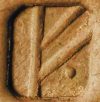

After a run of mostly Anglian stamps, I thought I would mix it up with this Kentish pot. The triangular stamp has a leaf-vein motif, and the shape certainly puts me in mind of a silver birch leaf or perhaps a black poplar. The pot itself is in the collection of the museum in Maidstone,Continue reading “O (inverted) Christmas Tree…”
Author Archives: farolfus
Magic Beer Stamp?

Runic inscriptions in Anglian and Saxon pottery are quite uncommon, but several 5th century urns were found in the cemetery at Spong Hill in North Elmham, Norfolk, bearing similar stamps comprised of three runes. They are stamped upside down on the exemplar, but the letters are Elder Futhark mirror runes (mirrored across the vertical axis).Continue reading “Magic Beer Stamp?”
Going to Gotland

I recently got an order for a dozen pots that will be based on some late Iron Age finds from Gotland, so I recreated a set of stamp dies using two groups of pot shards in the collection of the Historiska Museet in Stockholm. These were found at the same location in Grötlingbo parish, andContinue reading “Going to Gotland”
A Tale of Two Triangles
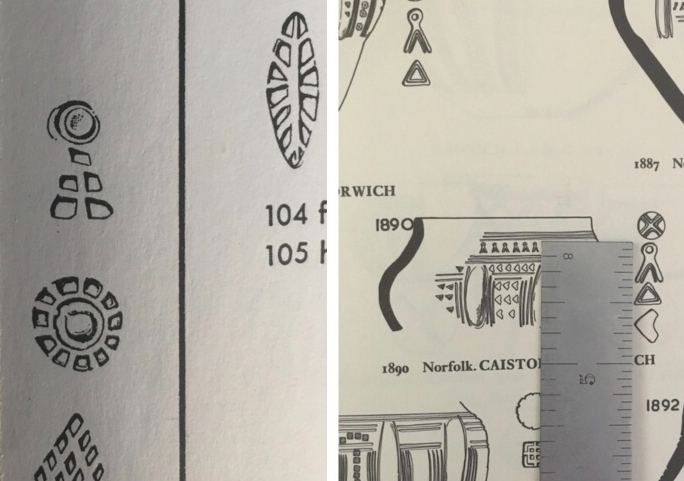
I got started with stamped pottery via an interest in Langobardic pottery styles, but once I began to branch out into the styles associated with insular Saxon and Anglian pottery traditions from the same time period, I started seeing a lot of similar general shapes and motifs. The gridded diamonds, for example, or some ofContinue reading “A Tale of Two Triangles”
Trefoil Time

There are a couple of very small trefoil-shaped stamps shown in the primary source for the Anglian and Saxon examples I work from, and today I decided to take a crack at one of the tiniest, fiddliest ones. The exemplar is shown here at the lower right, from a pot found at Newark in Nottinghamshire,Continue reading “Trefoil Time”
Gang of Five: Urn from St. Johns
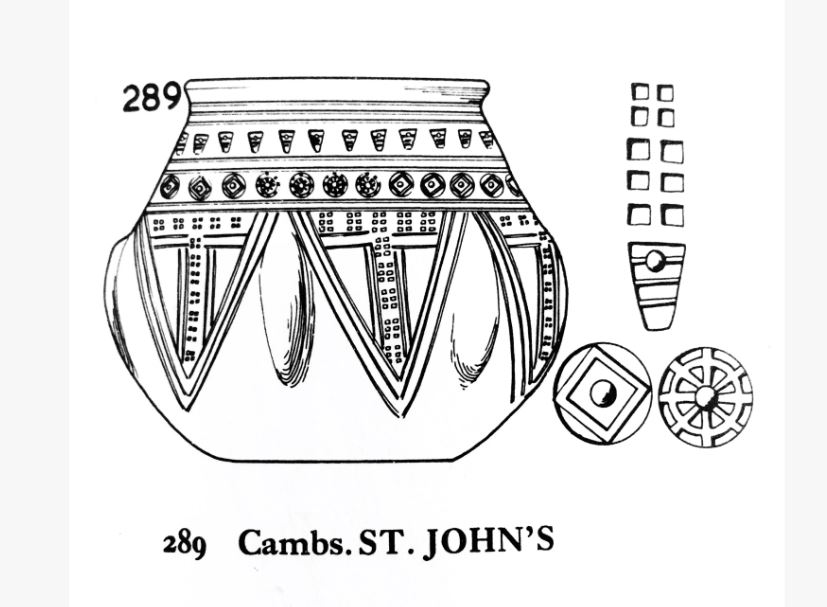
I had the day off work and it was pouring rain outside, so I ended up spending more time than usual in my shop this afternoon. I took the opportunity to tackle a group of five stamps that all appear on one pot from the cemetery at St. Johns in Cambridgeshire. Myres attributes this urnContinue reading “Gang of Five: Urn from St. Johns”
The Girton/Newnham Potter
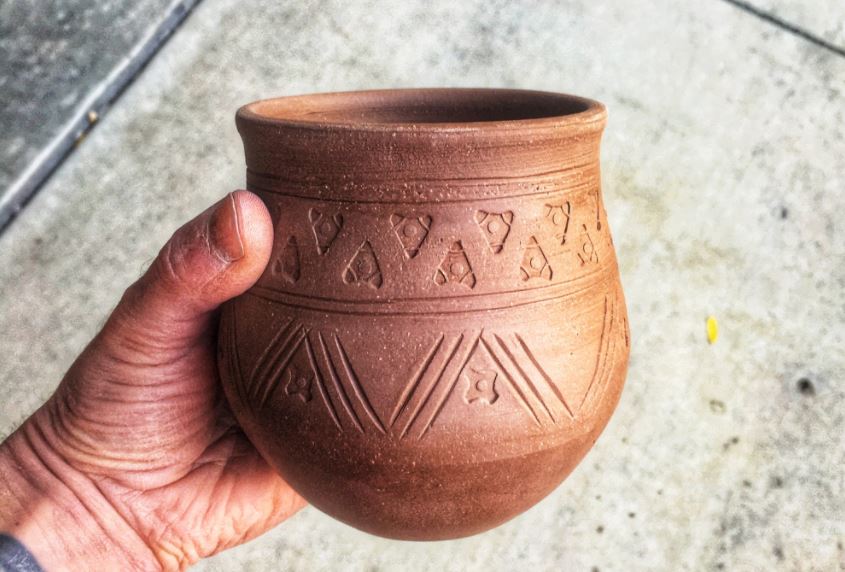
Continuing with the theme of specific workshops in East Anglia, here is a pair of stamp dies based on the ones used by a potter working in what is now Cambridgeshire. Examples of their work have been found in Girton and Newnham, and incorporate a triangular and cruciform stamp, both of which have a hollowContinue reading “The Girton/Newnham Potter”
Planta Pedis workshop

Here’s another case in which a particular pot stamp is distinctive enough to identify a specific potter or workshop. J.N.L. Myres identified this one as the “Planta Pedis” workshop (Latin for the sole of the foot) and while the shape of the stamp is highly simplified compared to the elaborate sandal-clad feet in Pannonian examplesContinue reading “Planta Pedis workshop”
Three stamps from Lackford
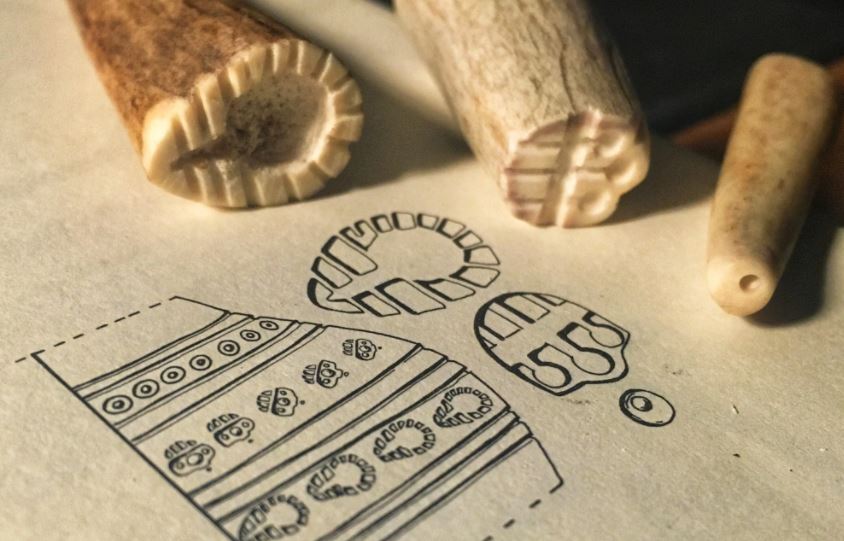
While a lot of the stamps found on British pottery in the Anglian or Saxon style use common, simple motifs like rings, quartered circles, or various shapes divided into grids, there are many that are quite distinctive. Today’s project was a grouping of three stamps based on a pot found at Lackford in Suffolk (justContinue reading “Three stamps from Lackford”
The Vellmar Pot
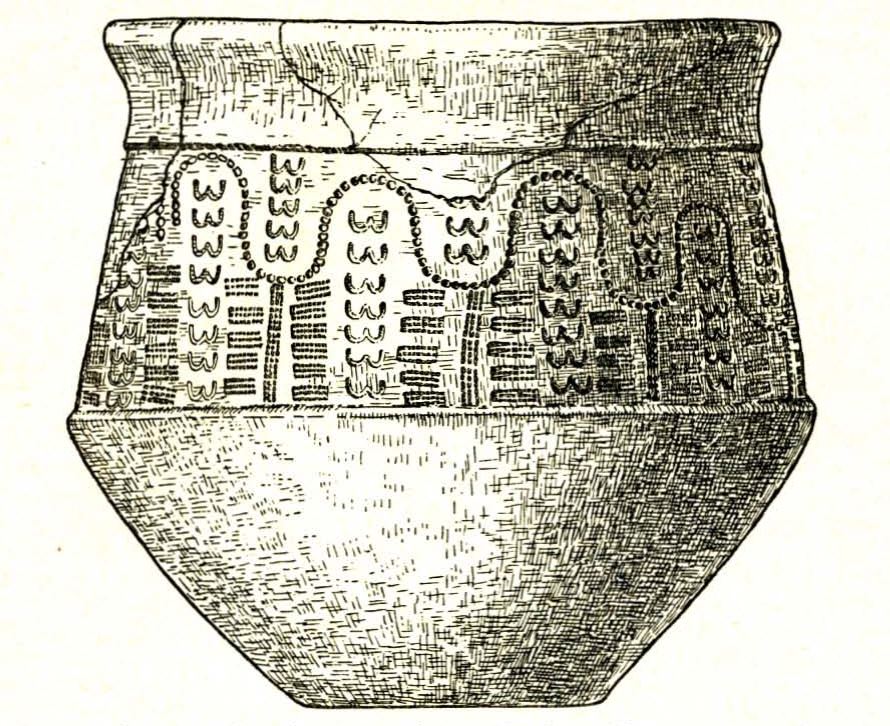
A lot of the stamp dies I’ve made so far are of motifs that are pretty common and pots often have stamped patterns that just use one or two motifs in repeating bands. In some cases, the pattern may involve a more complex arrangement of stamps, and this particular pot is one of them. ForContinue reading “The Vellmar Pot”
 farolfvs me fecit