
I recently got an order for a dozen pots that will be based on some late Iron Age finds from Gotland, so I recreated a set of stamp dies using two groups of pot shards in the collection of the Historiska Museet in Stockholm. These were found at the same location in Grötlingbo parish, and may be the work of the same potter or workshop.
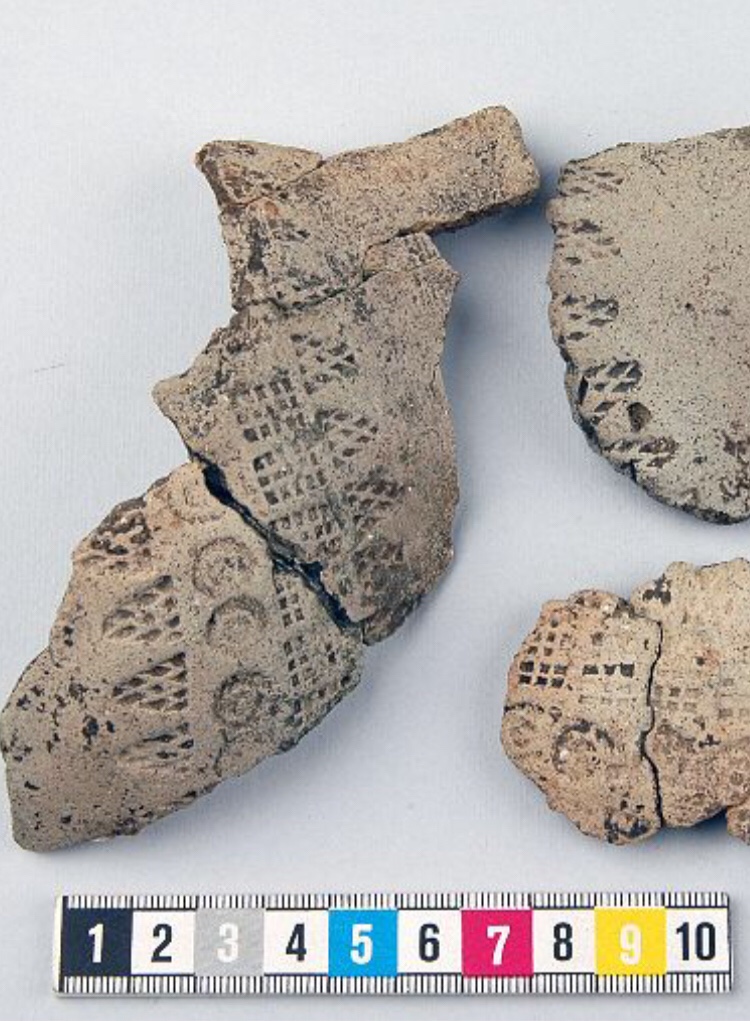
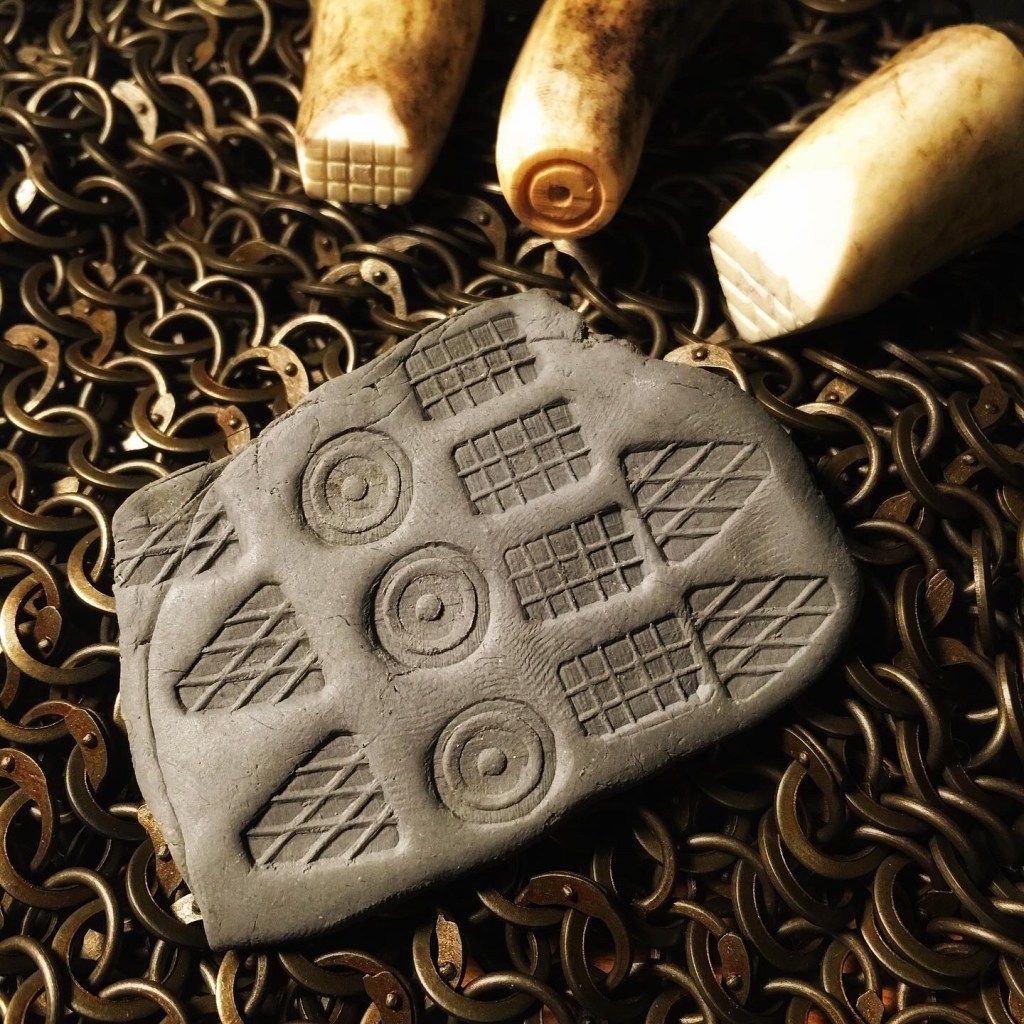
The first pot uses three stamp dies: a triangular one divided into a diamond lattice, a ring-and-dot, and a 3×5 grid. Each one is just over a centimeter in its longest dimension. Luckily, I already had a ring-and-dot stamp that was exactly the right size – I had made it based on an Insular Saxon example, which just goes to show how similar the pottery traditions were across the various germanic-language groups at that time. In fact, all the stamp motifs used on this pot are either identical to or very close to motifs that appear on Anglian and Saxon pots found in Britain and dated between 450 and 650 CE.
The second group of fragments used the same (or similar) triangular stamp die, along with three other motifs: a circle divided into a 3×3 grid, a very fine 6×6 gridded square, and an S-shape with a hollow center.
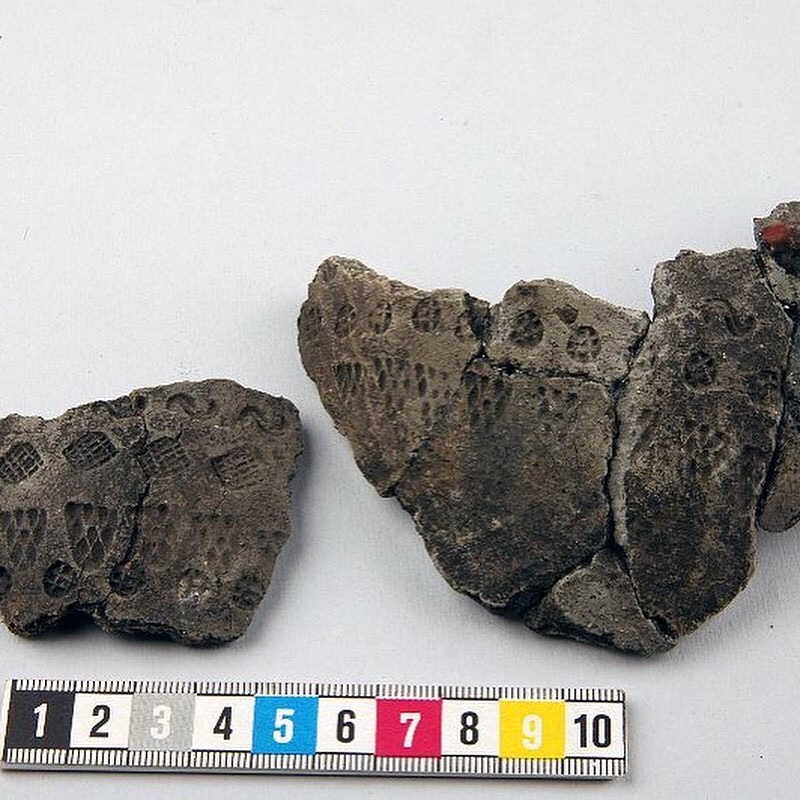
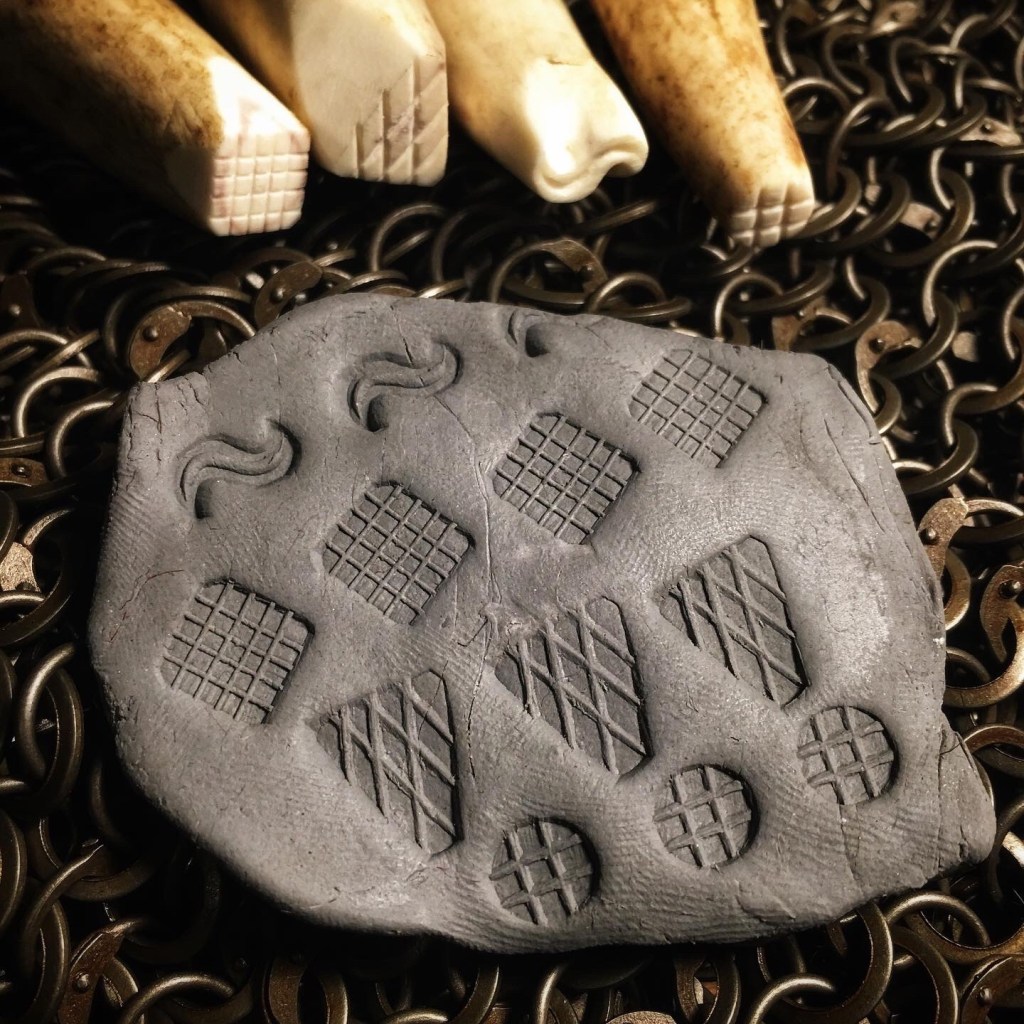
I’ve reproduced the patterns on the two main fragments, and if I had to guess, they are from the same vessel and the complete pattern (in rows from top to bottom or vice versa) would be circle, triangle, grid, S, circle, triangle. I’m looking forward to debuting these on that batch of pots, so stay tuned!

