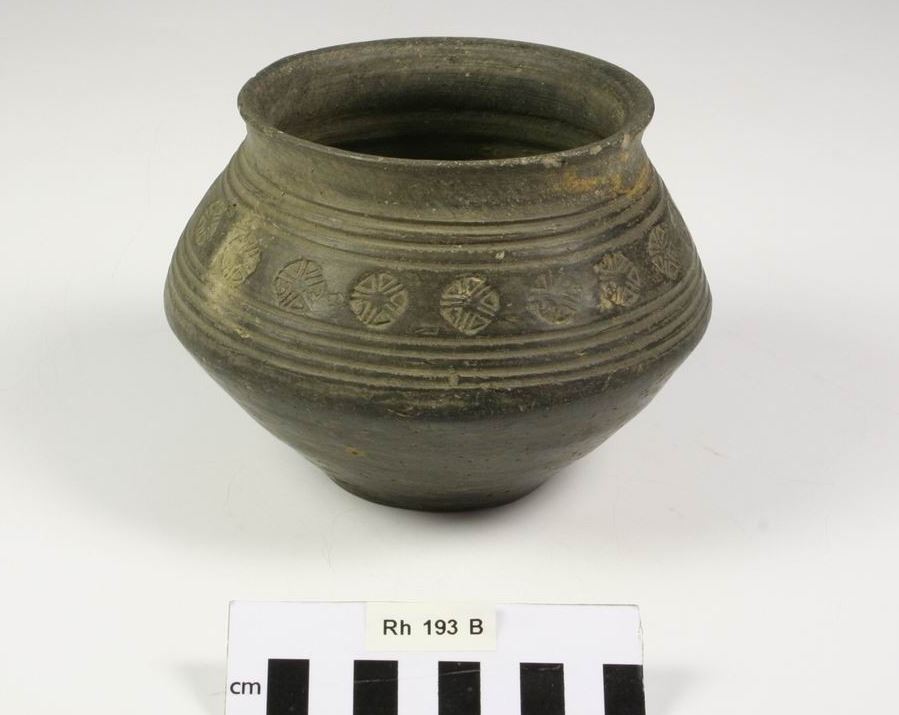
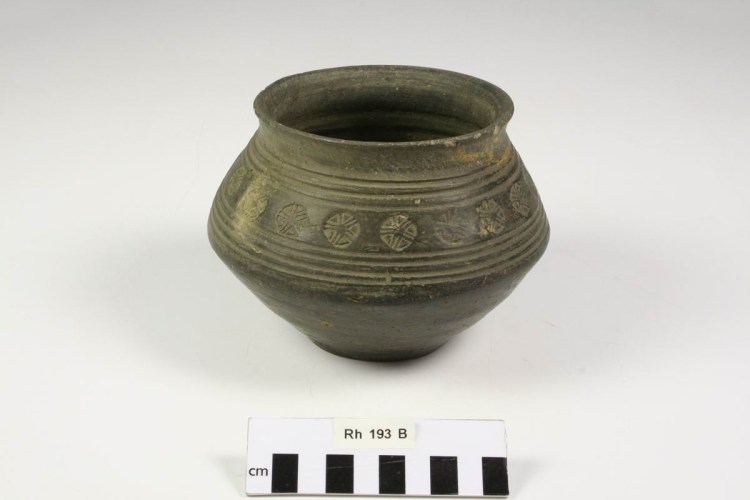
For the most part, my focus is on making stamping dies and learning more about the underlying technology and craft. Making the actual pots is often secondary – I make the pot because I need something to test out the stamps on. In this case, though, I saw this little pot go by in a museum database and decided I actually wanted to make one just like it. Not sure why; I think the proportions appealed to me, and the rosette motif was one I hadn’t already made. It’s a Frankish piece from the collection of the Rijksmuseum van Oudheden and is dated between 525 and 600 C.E. It was excavated in the Netherlands from Grave 193 at Rhenen.
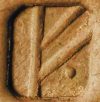
Many of the rosette types of stamp dies have an even number of intersecting lines, and can be carved or sawn straight across the face of the stamp from edge to edge. With just five pairs of radial lines, this one had to be done carved by working out from the center. It took a lot of testing to get the parallel lines nice and crisp without obliterating the space in between. Where those lines converge at the center, things lose a bit of definition as it hits the porous core of the antler, but if you look closely at the original, the same thing happens, so I guess I’m on the right track. Here’s a test impression with the incised lines added just so I could get the full effect. The rock at left is just a rock. I needed something to balance the stamp on.

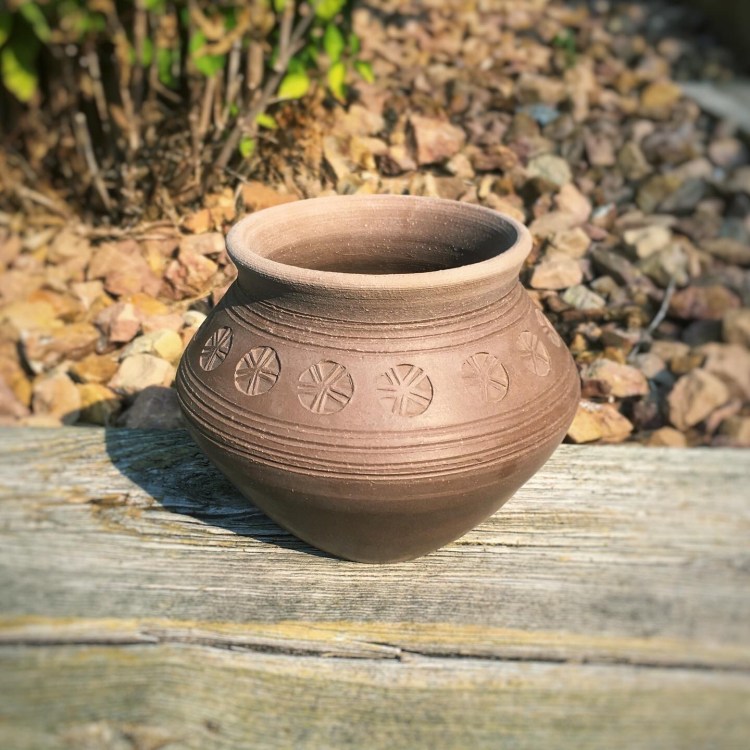
And now here’s the test pot I made, side by side with the original. I think I could have spaced the stamps a little closer – the original pot has 18, while I could only fit 16, and the upper set of grooves should be a little lower so that the stamp zone is a tighter fit. Still, I’m pretty satisfied with how it turned out.
 farolfvs me fecit