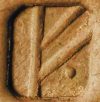
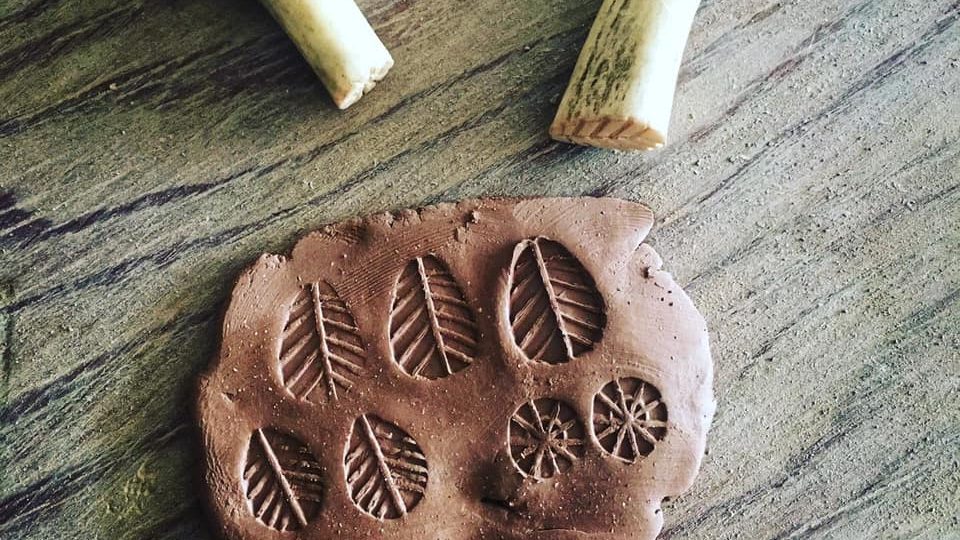
As a surprise for two reenactors who focus on what is now Switzerland in the 6th century CE, I did some digging (figurative, of course) to find some stamped pottery motifs that would be appropriate for that time and place so that I could make them some little beakers.
I ran across a couple of pots from the first post-Roman archaeological layer at the Jakublihaus excavation in Kaiseraugst and decided to reconstruct a couple of the leaf-shaped stamping dies that appear on some of those ceramic finds.

The leaf motif is a teardrop with a central line and branching veins. To make these, I started with two pieces of antler that were already close to this exact shape in cross-section. I buy antler tips by the pound, and a pretty decent percentage of them are this shape, which makes me suspect that the maker of the original stamp dies from Kaiseraugst could have been working in a similar fashion and letting the natural materials dictate the shape of the stamp.
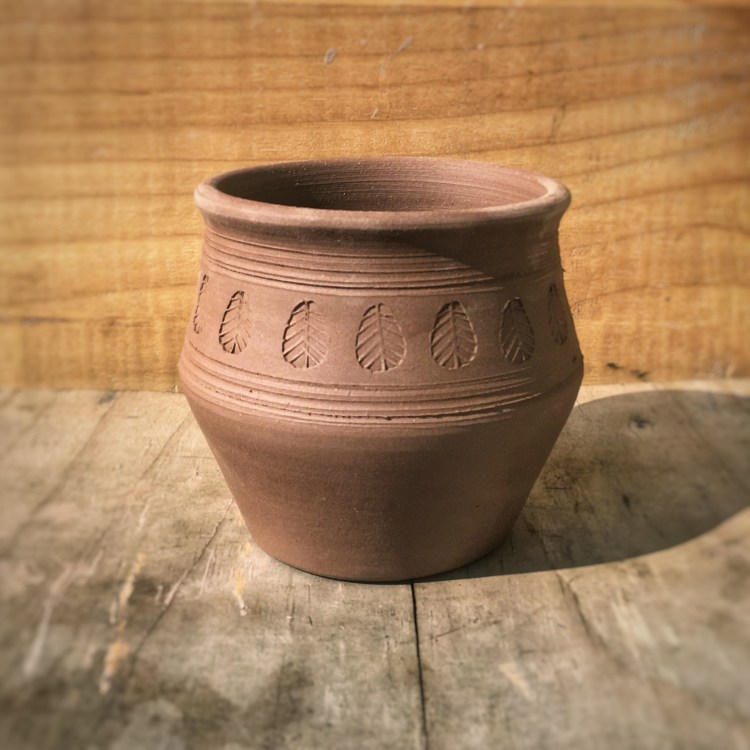
Since the central line goes all the way across the face of the stamp, I cut it with a saw and then used a sharp blade to work outwards from the first cut on a diagonal toward the edge to create the remaining veins. The Kaiseraugst potter(s) seem to have had several very similar stamp dies in use at the time, so I made a smaller one and a larger one. I ended up decorating a couple of small biconic beakers, in keeping with the forms that the original stamps were found on – although they appeared on much larger vessels.
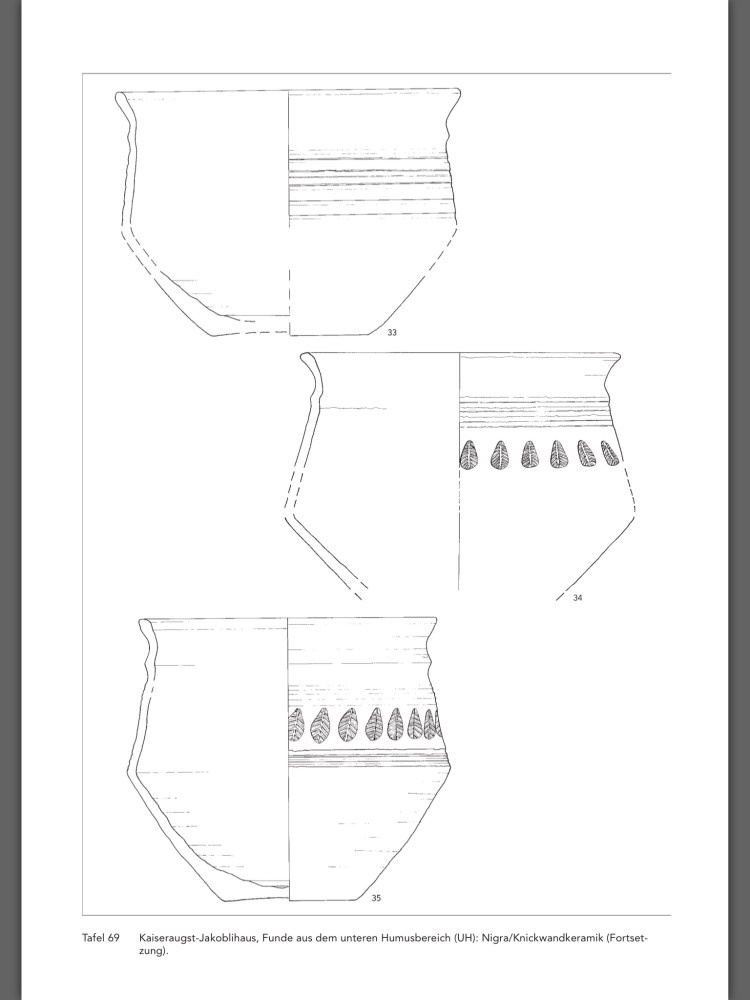
Source: Marti, Reto. 2000. Zwischen Römerzeit und Mittelalter: Forschungen zu frühmittelalterlichen Siedlungsgeschichte der Nordwestschweiz (4. – 10. Jahrhundert) [1] [1]. Liestal: Archäologie- und Kantonsmuseum Baselland. Plates 69 & 70.
 farolfvs me fecit