
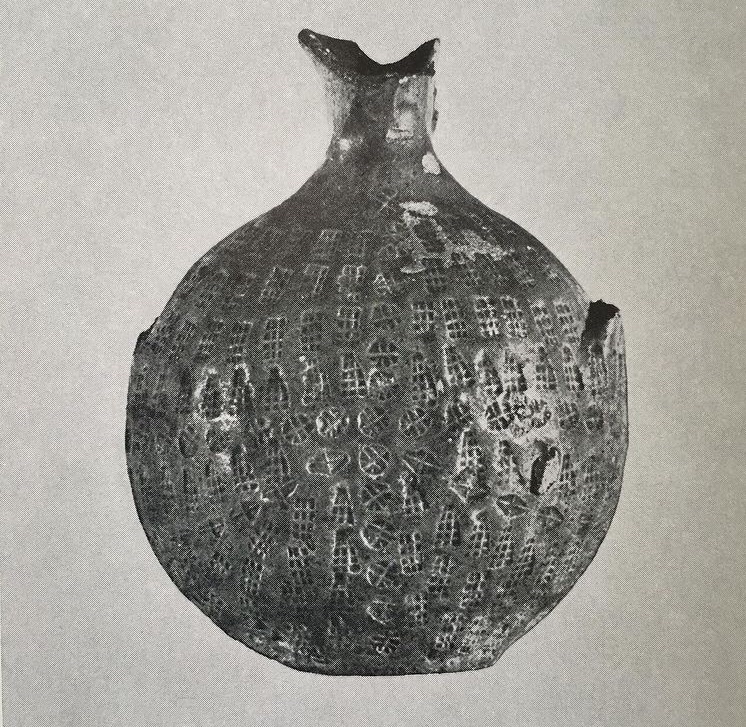
When Otto von Hessen published his 1968 book on Langobard ceramics from Italy, he included two examples of this type of ceramic canteen, sometimes referred to as a “pilgrim flask.” One of them, from Biella, was completely covered in stamped decoration, so I decided to reconstruct a set of stamp dies to use on a future replica of it.
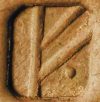
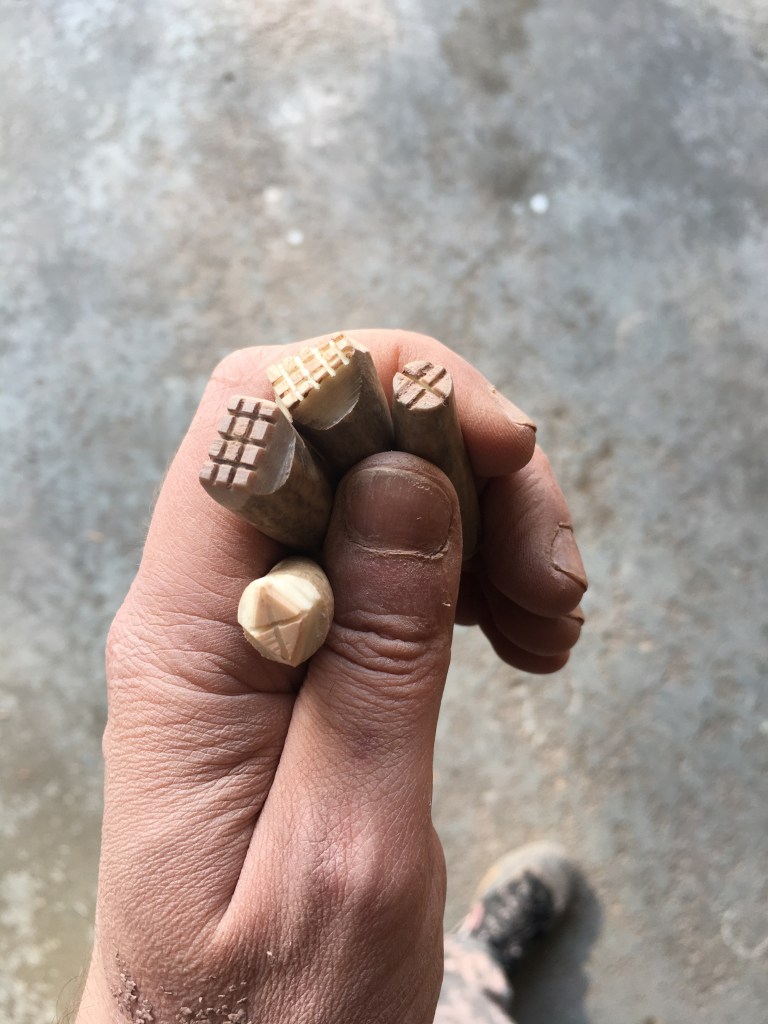
All told, there are four stamps that make up the pattern; each one is essentially a grid cut into the face of a triangle, diamond, oval, or rectangle. I carved each of them from antler tips using von Hessen’s scale drawing of the stamp motif. That was the easy part.
The original canteen is missing part of its neck and the lugs on either side that would have held the strap. I also don’t have access to a photo of the back side or the bottom of it, so will need to contact the museum that has it before attempting the real thing. There are several ways a vessel like this could have been made and I will need to get a better look at the original to be certain how it was done – my best guess is that it was thrown as a squat bottle and paddled flat on one side so that it would sit well against the wearer’s back, but it is possible that it could have been thrown or hand molded in two halves (a deep bowl and a shallow one) and joined with a seam, then a separate thrown spout could have been added along with the lugs.
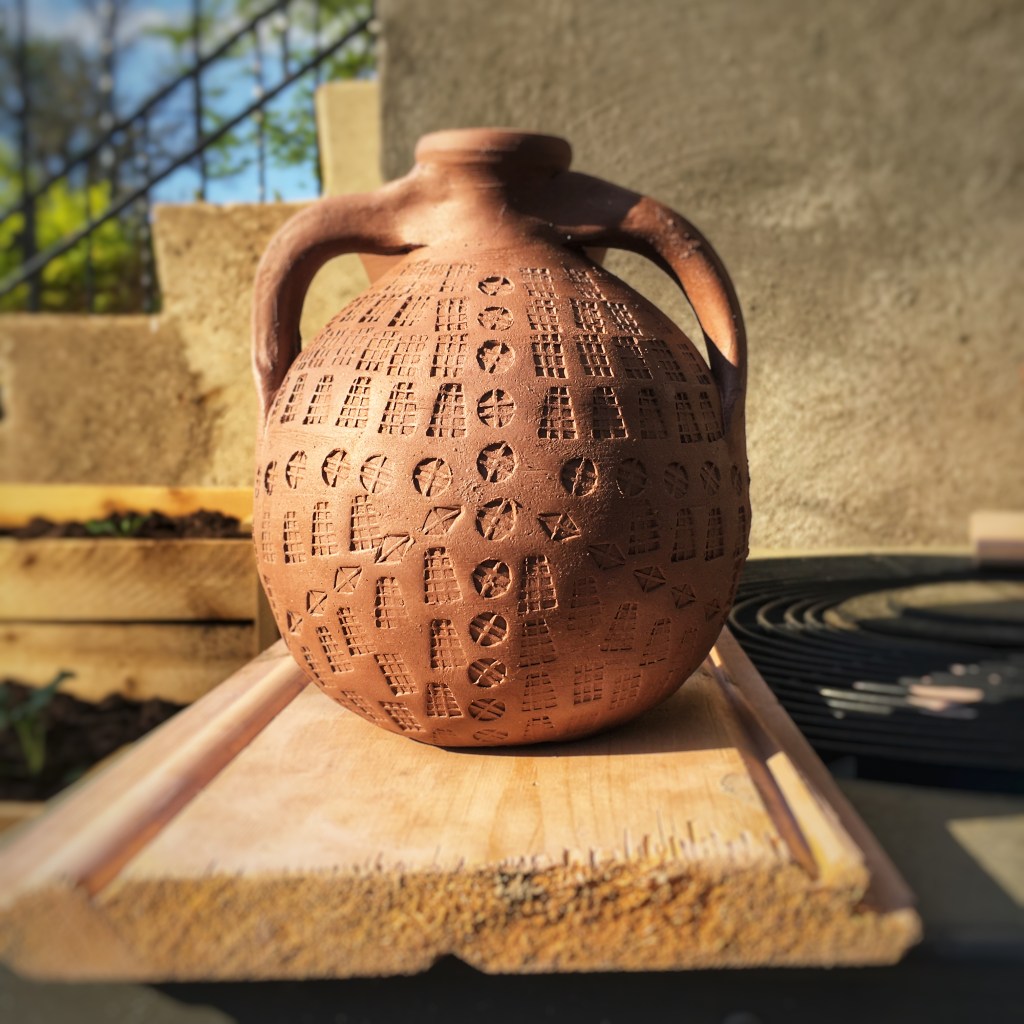
In the meantime, I did this as a test piece using the paddled bottle method just to I could understand the layout of the stamps. The oval stamp die is used to create a cross pattern, then the diamond shape forms two diagonals on the lower half. The remaining space is then filled in with the triangular and rectangular shapes. That went reasonably well, although I’ll definitely need to start with a larger basic form, since after paddling it, this one didn’t end up quite as big as I had intended so I could not fit the exact number of stamps on the surface.
Source: Hessen, Otto von. 1968. Die langobardische Keramik aus Italien. Wiesbaden: Steiner; pl. 4.
 farolfvs me fecit